Beware of GPU Scams: How to Spot Fake Graphics Cards
By GPU Sniper | pctechsniper.com
Last Updated: July 2025 | Questions? Contact Us
Quick Summary
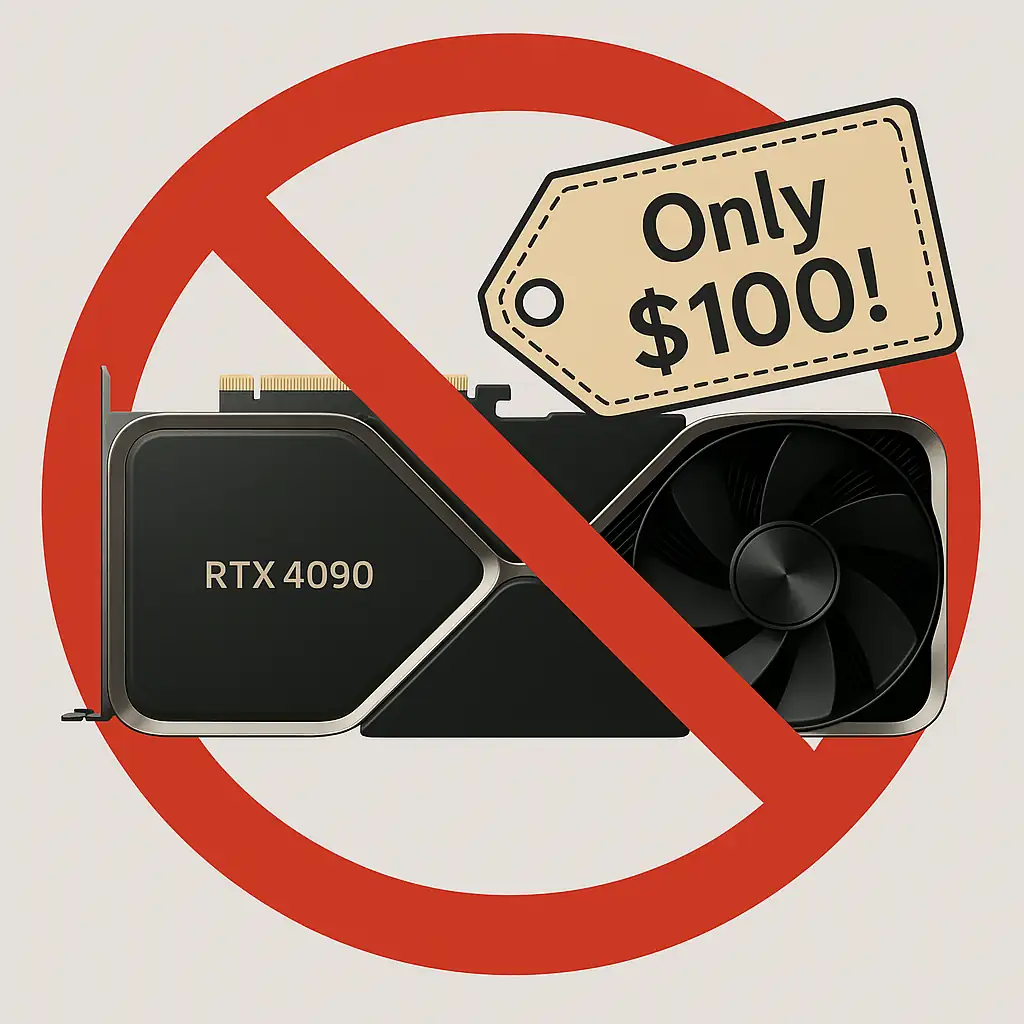
Spotted a $100 RTX 4090? It's almost certainly a scam. Fake listings are everywhere, and scammers are banking on you letting your guard down. Learn the common red flags and how to protect yourself when buying a GPU online.
That $149 RTX 4090 You Just Saw? It's a Trap.
While browsing Amazon, we recently spotted several listings for an RTX 4090 priced at just $149.00.
It looked convincing if you just glanced at the title — the title even says "ZOTAC", a known budget card manufacturer, and the specs include the name of a legitimate GPU model.
But there's just one problem: the RTX 4090 has an MSRP over $1,500.
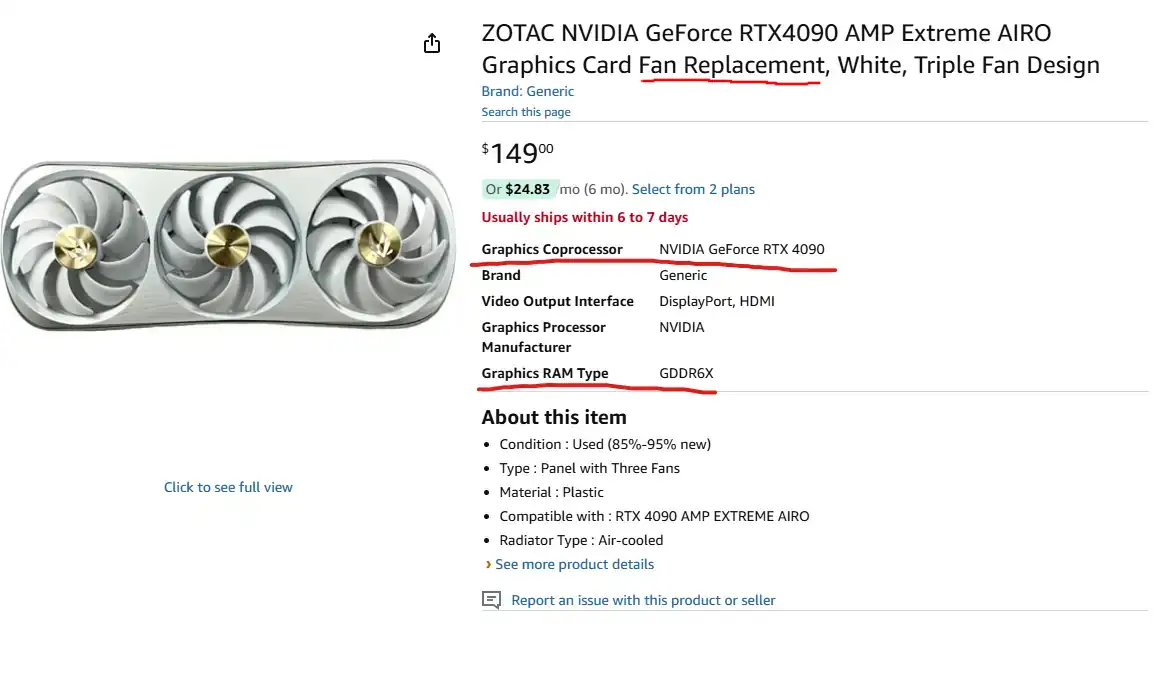
This listing includes the text "Fan Replacement", indicating that the item is not actually a graphics card, it's just a replacement fan. We've seen worse listings in the past — ones that claim to be the GPU itself — but to keep our article safe, we won't be displaying those here.
Even though the specifications say "Graphics Coprocessor: NVIDIA GeForce RTX 4090", that doesn't mean it's a legitimate GPU. A price this low for a flagship card just doesn’t add up. And in almost every case, deals like this end in disappointment — or outright theft.
What Actually Shows Up at Your Door?
If you place an order on one of these suspicious listings, you’re playing GPU roulette. Here are some real scenarios people have reported:
- A cardboard box with no GPU inside.
- A photo of the GPU — literally just a picture printed out.
- A broken or unrelated GPU that looks like a 4090 but performs like a GT 710.
- A fake heatsink with no actual silicon underneath.
- A cleverly designed dummy card that doesn’t even function.
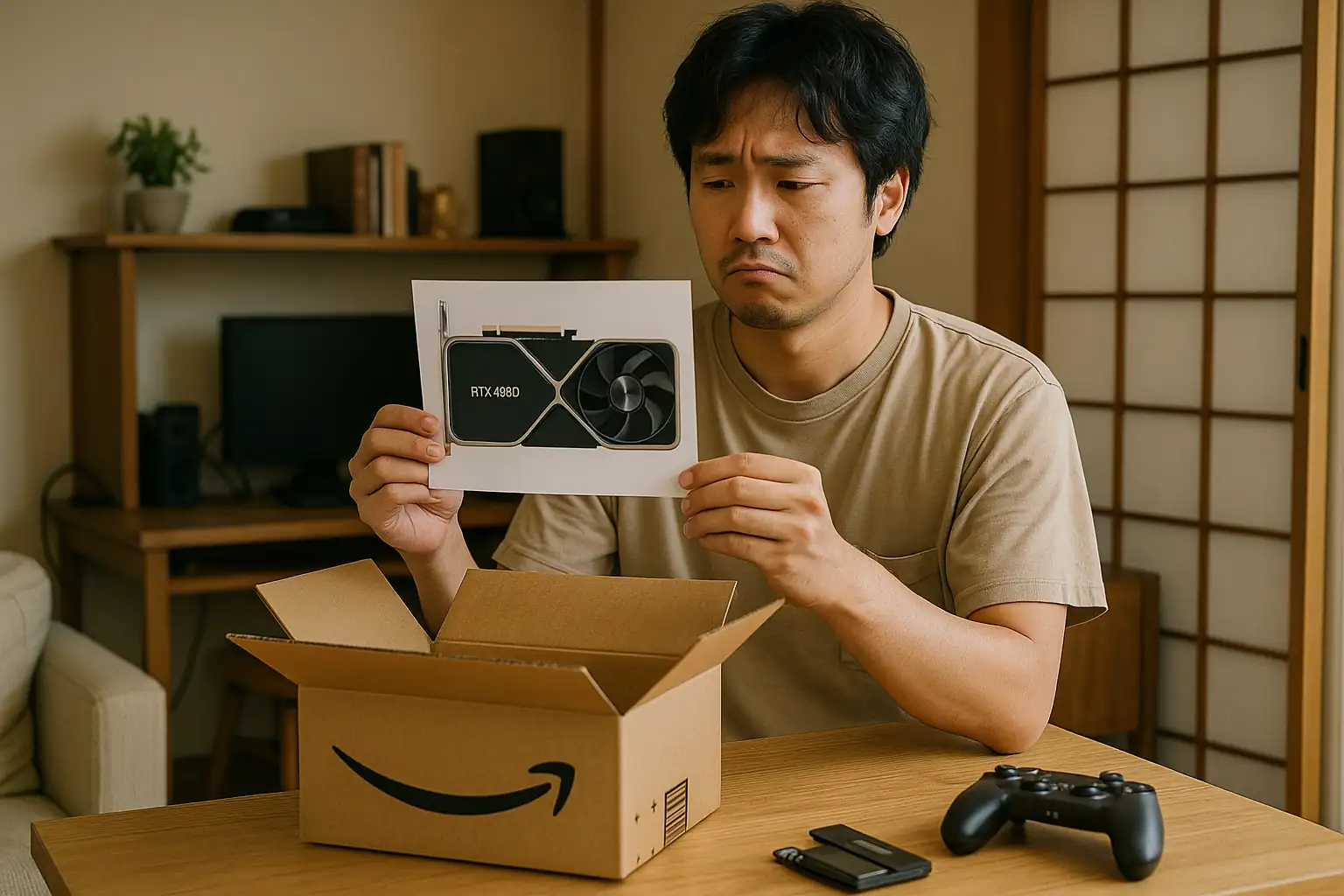
These scams aren’t just frustrating — they’re dangerous. Some fake cards can even short your motherboard or overload your PSU.
Even AI Can Be Fooled — And Scammers Know It
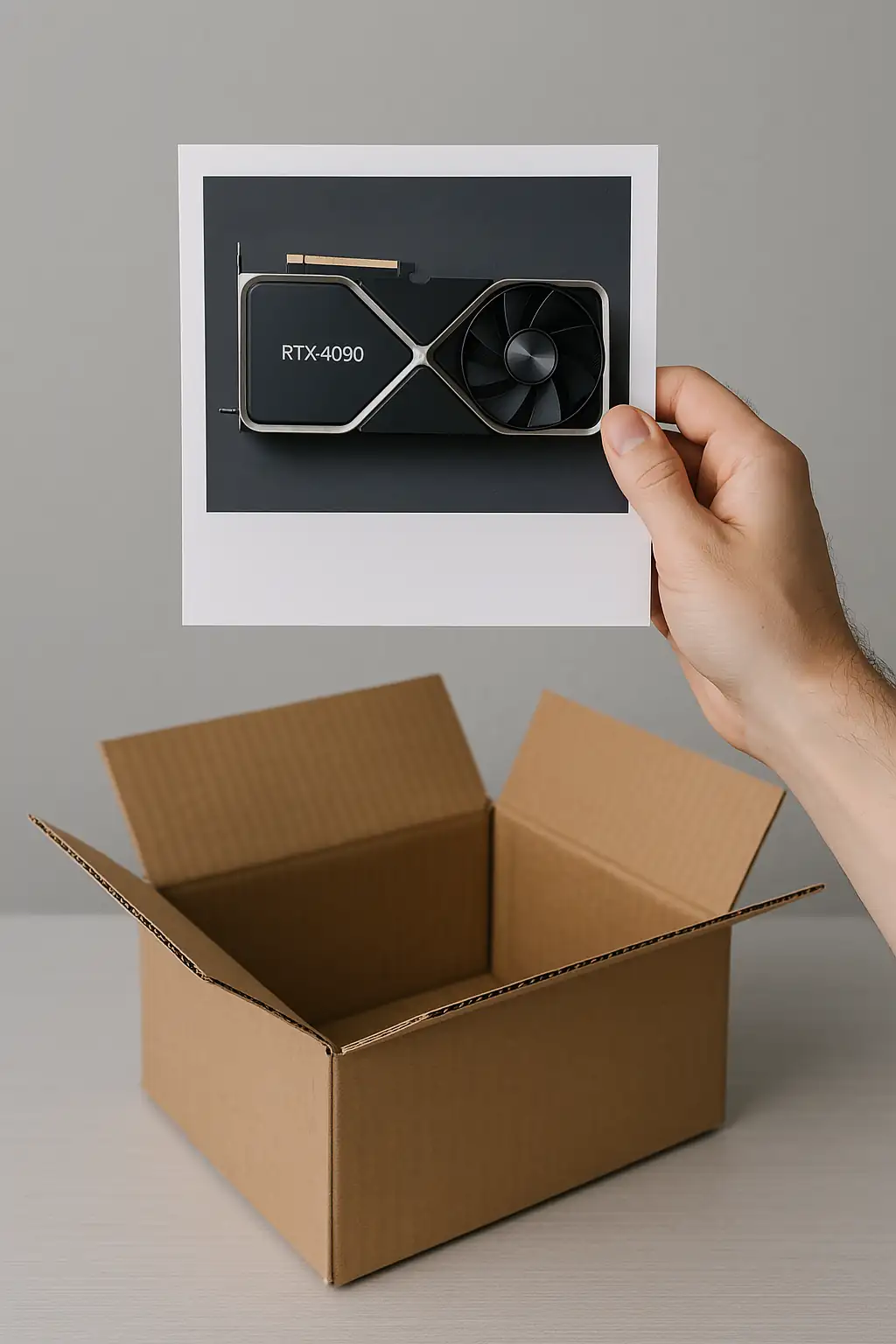
Some GPU scams aren’t even designed to fool humans. They’re created specifically to target automated scalper bots and AI scrapers. These systems — used on platforms like eBay and by resellers — will auto-buy high-value cards the moment they appear. GPU Sniper is intended for human use only and does not permit, recommend, or endorse the use of automatic buying software.
For the newest GPUs (e.g., RTX 50), we have a mostly verified database that is almost entirely human-managed. However, especially when counting older listings, there can be hundreds and thousands of items to keep track of. For these older GPUs, GPU Sniper uses AI to detect, categorize, and rank listings based on their claimed tier, brand, specs, and other information. We’ve built systems to flag suspicious activity — but AI isn’t perfect. A listing might get past our filters before a human catches it. In such a case, we will quickly remove the listing from our site, but this does not stop price notification emails from being sent out.
That’s why we urge our users to stay alert. If a listing seems too good to be true, don’t trust it just because it appears on GPU Sniper. Our systems are good, but scammers are relentless.
What to Do If You Bought a Fake GPU
If you’ve already ordered a suspicious GPU, don’t panic. Most large retailers offer strong buyer protections. Amazon, in particular, has a generous 30-day return policy and often allows returns for any reason — especially for counterfeit or defective items.
Personally, I once ordered a "30TB SSD" for my NAS setup — the price was too good to be true, and sure enough, it only had 64GB inside. I filed a return with Amazon and got a full refund within three days. No hassle.
Newegg and Best Buy also offer returns for defective or misleading products, but in my experience, Amazon is the most accommodating. Just be sure to keep all packaging and file your return request promptly.
Have You Encountered a GPU Scam?
If you’ve fallen victim to a scam, or if you’ve spotted a listing that looks suspicious, help us protect the community. We rely on feedback from readers like you to improve our detection systems and flag malicious sellers.
Report a Scam